Lifey
Personal life operating system — goal graph, daily habits, full budget engine, and a sync architecture forged by a real data-loss incident.
The problem
Integrating five connected user tracking systems — goals, checklist, progress, command center, and budget — into a single web and mobile client presents massive data integrity risks. After an empty server response during a sync cycle silently wiped local database state, data safety and offline recovery became the top priority.
Our answer
We re-engineered the synchronization engine to use a local-first architecture with strict offline fail-safes and sync transaction journals. We packaged the interface for both web (Vite) and Android (Capacitor) in lockstep, styled using dynamic CSS variables that support 5 calm visual color themes.
See the experience in motion.
Use the player to preview the interaction, motion language, and final product flow directly inside the case study.
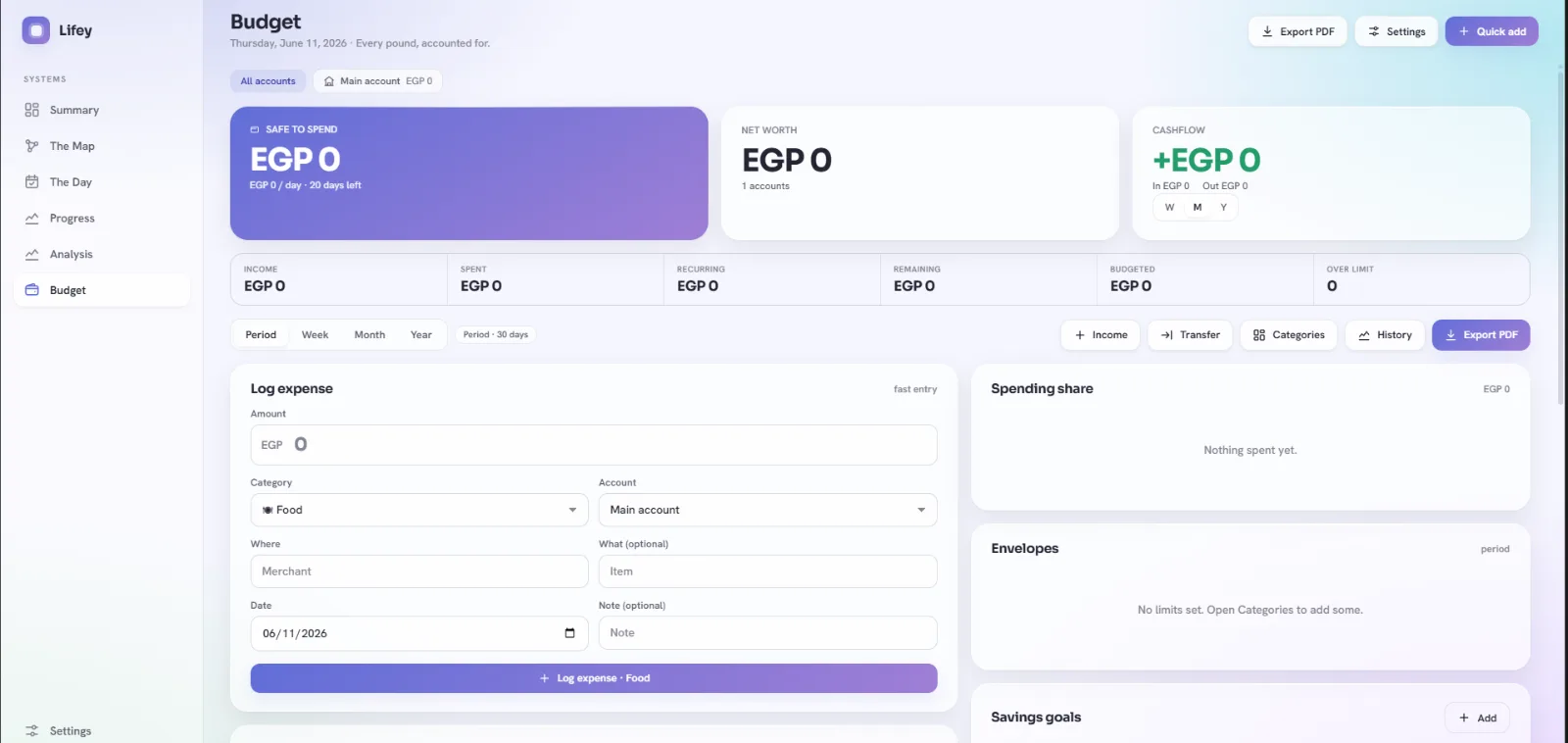
Every frame, collected.
All project visuals are now grouped by folder and rendered directly from the live project media archive.
Everything, under one roof.
From the first wireframe to the final deployment, every piece was crafted in-house by one coordinated team — so nothing fell through the gaps.
Connected Core
Goal graph breaks life goals down into actionable checklist tasks, daily habits, and budget items.
Journal Sync
Transaction journal sync protocol that prevents database overwrites and operates entirely offline.
Dynamic Themes
Five beautiful, system-level color palettes built with CSS variables to reduce visual fatigue.
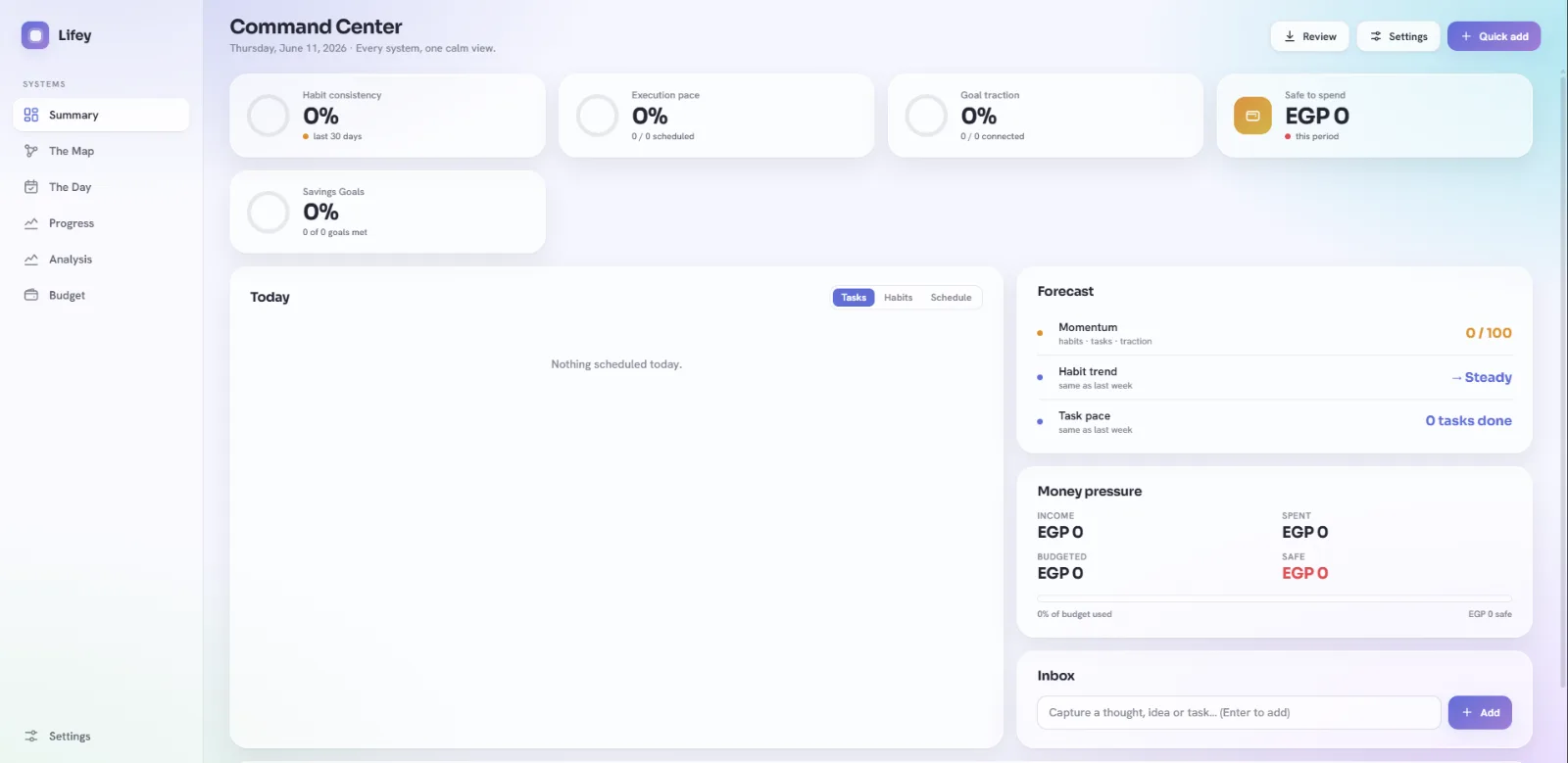
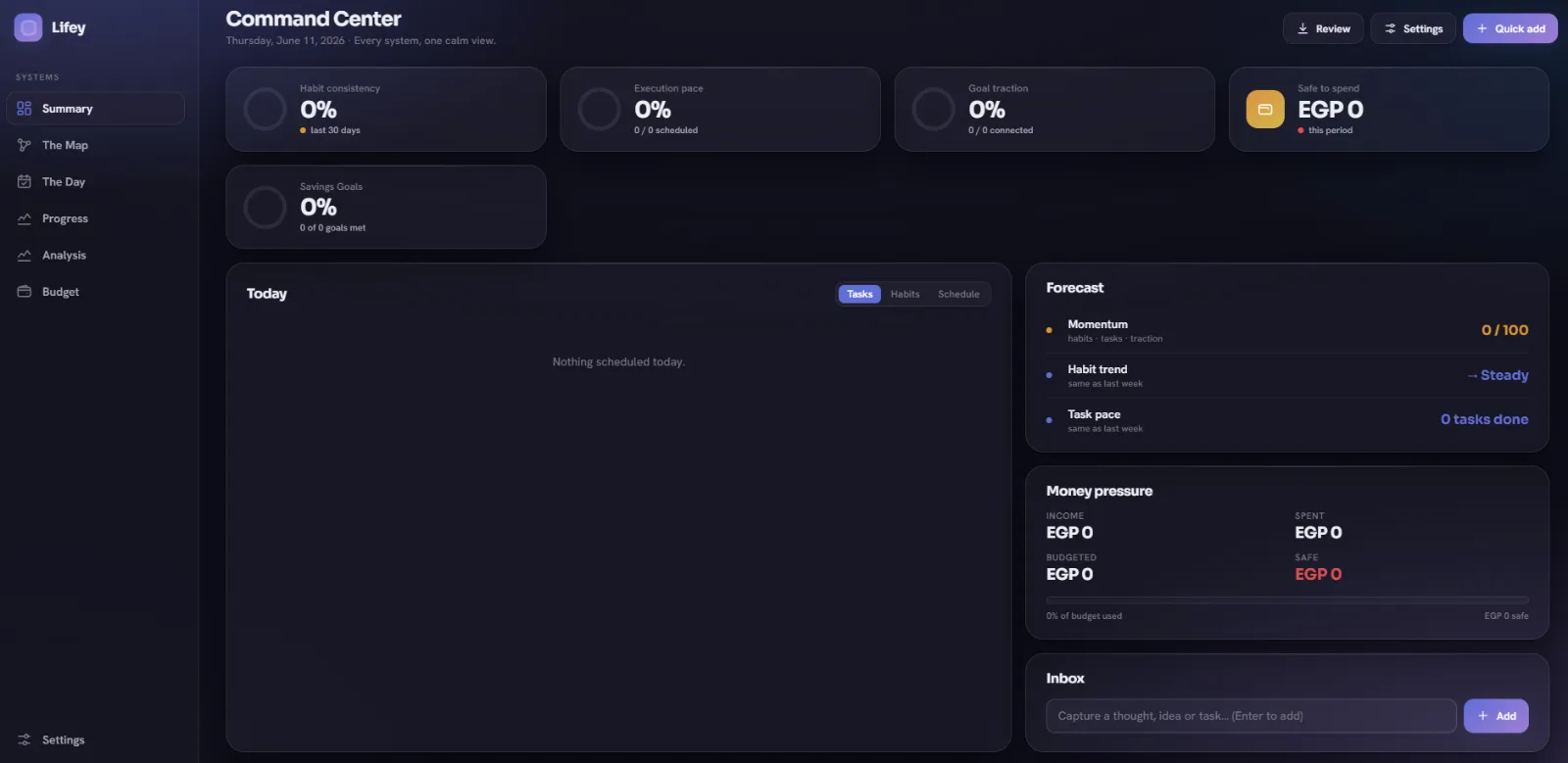
Numbers that moved.
Within 60 days of launch, the impact was undeniable.
A brand built to command.
Every visual decision — from the mark to the motion — designed to feel inevitable.
Cc 123 & ?!
The sync reliability is outstanding. Having all my systems work completely offline, with absolute safety, completely changed how I organize my life.